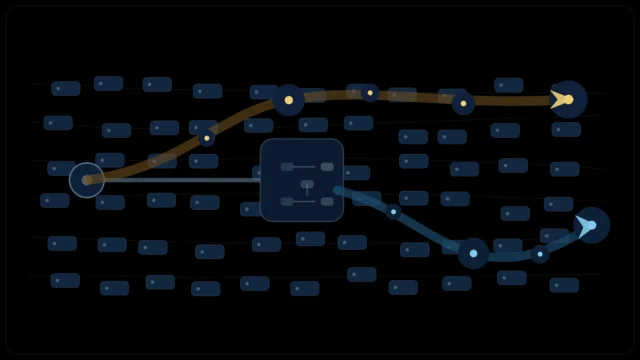
Slashing is a proof-of-stake penalty that removes part of a validator’s staked assets when the validator violates rules the network can prove onchain. It is not the same thing as simply missing rewards, going offline for a short period, or seeing the market price of the staked token fall. On Ethereum, for example, the protocol distinguishes ordinary inactivity penalties from slashable actions such as double proposals and contradictory attestations; the current Ethereum proof-of-stake penalty documentation describes slashing as forced validator removal plus loss of staked ETH.
For users, the practical question is not only “can validators be slashed?” but “whose money is actually exposed, under what conditions, and how does the risk differ between solo staking, delegated staking, liquid staking, and staking through an exchange?” The answer depends on the network and the service model. Slashing rules are protocol-specific, and a provider can also add its own contractual or operational layer on top.
Key takeaways
- Slashing is a protocol penalty for provable validator faults; ordinary downtime may be penalized differently and often less severely.
- A validator can expose delegated stake as well as its own stake on networks where delegators share slashing risk.
- Ethereum currently separates inactivity penalties from slashable consensus violations and applies stronger penalties when many correlated validators are slashed together.
- Cosmos SDK chains can configure their own slashing parameters, so one Cosmos-based chain should not be assumed to use the same percentages as another.
- On Polkadot, nominators can lose part of their bonded DOT if a backed validator is slashed.
- Liquid staking does not make slashing disappear; it changes who operates validators and how losses may be socialized or absorbed.
- The safest comparison is not “highest staking APY,” but expected return after validator, custody, smart-contract, liquidity, and slashing risks.
Slashing vs ordinary staking penalties
The term “slashing” is often used too loosely.
A proof-of-stake system usually has several ways to discourage poor validator behavior. Missing attestations, being offline, signing conflicting messages, or participating in an attack are not always punished in the same way.
Ethereum provides a clear example. Its official proof-of-stake overview explains that validators can lose rewards when they fail to participate and can have stake destroyed when they behave dishonestly. Current Ethereum documentation identifies slashable behaviors that include signing two blocks for the same slot and submitting contradictory attestations.
That matters because a temporary Internet outage is not automatically equivalent to double-signing. The economic consequences can be very different.
A useful three-level model
| Event | Typical protocol response | Is this always “slashing”? |
|---|---|---|
| Validator misses duties briefly | Lost rewards or small inactivity penalties | No |
| Validator remains offline during prolonged non-finality | Larger inactivity penalties may accumulate | Not necessarily |
| Validator signs provably conflicting consensus messages | Stake loss plus forced exit or jailing | Yes, on networks that define the offense as slashable |
The exact rules vary by chain. The table is a mental model, not a universal parameter list.
How Ethereum slashing works
Ethereum’s current rules are unusually well documented, which makes it useful as a concrete example.
According to the official rewards and penalties documentation, a validator can be slashed for:
- proposing and signing two different blocks for the same slot;
- making a “surround vote” that conflicts with the consensus history;
- double voting by attesting to two candidates for the same target.
For a validator with a 32 ETH effective balance, Ethereum’s documentation currently describes an initial slashing penalty of 0.0078125 ETH, followed by a 36-day forced-exit period. A correlation penalty is applied around the midpoint. The larger the amount of stake slashed around the same period, the larger that correlation penalty can become.
That design tries to distinguish an isolated operator mistake from a correlated failure that could threaten consensus. If a single validator is slashed alone, the loss can be relatively small compared with the full stake. If many validators controlled by the same infrastructure fail in the same way, the economic penalty can become much more severe.
This is why operational concentration matters. A staking provider running many validators with the same keys, client configuration, cloud provider, or failover logic can turn one error into a correlated event.
Downtime is not the same as slashing on Ethereum
Ethereum’s solo-staking guidance explicitly says that being offline while the chain continues finalizing does not trigger slashing. The validator instead incurs inactivity penalties that are generally closer to the rewards it would have earned while online.
The distinction becomes more important if finality breaks. When more than one-third of the stake is not participating correctly, Ethereum can enter an inactivity-leak regime that progressively reduces the balances of offline validators until the remaining active stake can again form the required supermajority.
So the risk ladder looks roughly like this:
- brief downtime — missed rewards and small inactivity losses;
- prolonged network-wide participation failure — escalating inactivity losses;
- slashable consensus violation — forced exit and stake destruction.
A user comparing staking providers should ask which of these risks the provider’s architecture addresses, not simply whether the provider claims “high uptime.”
How Cosmos SDK chains handle slashing
Cosmos SDK makes slashing a configurable module rather than a single universal chain policy.
The official Cosmos SDK staking module describes validators as entities whose bonded stake can be slashed for misbehavior. Delegators backing those validators can also be exposed because slash calculations follow stake that was bonded at the time of an infraction, including certain undelegating and redelegating positions.
The SDK’s slashing design also distinguishes faults such as double-signing from liveness failures. A validator can be jailed for downtime and may later send an unjail transaction if allowed. A validator tombstoned for a double-sign offense cannot simply rejoin with the same consensus identity.
The important user-level lesson is that “Cosmos slashing” is not one fixed percentage. Cosmos SDK chains can configure parameters differently. When evaluating ATOM or another Cosmos-SDK-based network, read that chain’s actual slashing parameters rather than relying on a generic number from a staking article.
Polkadot: nominators share validator risk
Polkadot makes the delegator dimension particularly explicit.
The official Polkadot nominator documentation warns that nominators should choose validators carefully because a validator that behaves improperly can be slashed and nominators can lose some DOT as well.
Its advanced staking documentation further explains that slashing is applied as a percentage, so larger bonded positions lose more tokens in absolute terms for the same slash percentage.
For a delegator, this changes the decision from “which validator pays the highest reward?” to a broader risk question:
- how concentrated is the validator’s infrastructure;
- how long has it operated without serious incidents;
- does it run multiple consensus clients where relevant;
- does it publish operational practices;
- how much commission does it charge;
- what happens if it is slashed;
- can the nominator switch validators quickly enough for the network’s unbonding rules.
Who actually loses money when slashing happens?
The answer depends on the staking structure.
Solo validator
The operator controls the validator and directly bears protocol penalties. There is no external staking company to absorb the loss.
Delegated staking
On networks where delegators share slashing, some of the delegator’s bonded stake may be cut because of the validator’s behavior. The user may have done nothing wrong operationally but still chose the operator.
Staking-as-a-service
The user may retain withdrawal credentials while outsourcing validator operation. Ethereum’s delegated-staking guidance notes that poor provider performance remains a risk outside the user’s direct control and that a slashed validator is forcibly exited.
Whether the provider compensates customers is a separate contractual question. Protocol rules do not automatically guarantee reimbursement.
Exchange staking
The exchange may pool risk, compensate users, socialize losses, or reserve contractual discretion. A user should read the service terms rather than assume the protocol’s raw slashing event passes through one-for-one.
Liquid staking
The protocol operates or coordinates validators and issues a transferable liquid staking token. Slashing risk still exists at the validator layer. The economic impact on token holders depends on the protocol’s validator set, insurance or reserve mechanisms, withdrawal design, and how losses are reflected in the liquid token’s backing.
A worked example: why headline APY is incomplete
Assume two staking services advertise annual rewards before fees:
- Service A: 4.5%
- Service B: 5.2%
If all you compare is advertised yield, Service B wins.
Now add risk:
- Service A uses multiple independent operators, publishes validator performance, and has a defined loss-handling policy.
- Service B runs highly concentrated infrastructure and gives little information about how slashing losses are handled.
The extra 0.7 percentage points is not free. It is compensation you receive while taking a different operating and counterparty risk profile.
A more useful framework is:
Net staking outcome = protocol rewards − fees − inactivity losses − slashing losses − liquidity costs − custody/smart-contract losses
Most of those terms are uncertain, which is exactly why a single APY figure is not enough.
Slashing risk matrix
| Staking model | Who operates validator? | Can user be exposed to slashing? | Extra risk layer |
|---|---|---|---|
| Solo staking | User | Yes | Key management, uptime, failover, client operations |
| Non-custodial staking service | Provider | Yes | Provider operations and service contract |
| Delegation / nomination | Validator | Often yes | Validator selection and unbonding rules |
| Liquid staking | Protocol/operator set | Yes | Smart contracts, token liquidity, operator set |
| Exchange staking | Exchange or partner | Potentially | Custody, terms, pooled loss handling |
This matrix is intentionally qualitative. Actual exposure must be checked against the specific network and service.
Correlated slashing is the risk many users miss
Slashing becomes especially dangerous when validators that appear separate actually depend on the same infrastructure.
Examples include:
- the same validator client version;
- the same cloud provider;
- the same key-management system;
- the same signing middleware;
- identical failover logic;
- copied configuration;
- one operator controlling a large share of a staking pool.
Ethereum’s correlation penalty is designed specifically so that simultaneous slashings can become more expensive. Even on networks without the same formula, correlated operational failure can still create concentrated economic loss.
This is one reason decentralization at the validator-operator level matters to a staker even if the user never runs a node.
Can a user be slashed after starting to unstake?
Sometimes, yes.
In Cosmos SDK systems, the staking module can continue to apply slashing to certain unbonding or redelegating stake if the relevant infraction occurred while that stake was still bonded. That prevents a validator or delegator from escaping a known future penalty simply by racing to unbond after misconduct.
Other networks implement their own timing rules.
The safe assumption is not “I clicked unstake, therefore slashing risk is gone immediately.” Check the chain’s unbonding period and how historical infractions are handled.
Common misconceptions
“Any validator downtime means slashing”
No. Many networks distinguish ordinary downtime from slashable consensus violations. Ethereum does so explicitly.
“Delegators cannot be slashed because they do not run servers”
False on networks where delegated stake shares validator penalties. Polkadot documentation warns nominators about exactly this risk.
“Liquid staking removes validator risk”
It changes who manages validators and may diversify operators, but underlying validators can still be penalized.
“A slash is always the same percentage”
No. Some networks use configurable parameters, different offense classes, or penalties that scale with correlated failures.
“The highest APY is the best validator”
Yield is only one input. Operator concentration, historical performance, custody, smart-contract risk, fee policy, and slashing treatment can matter more.
A practical due-diligence checklist
Before staking through a validator or provider, check:
- Which network rules define slashable behavior?
- Is ordinary downtime treated differently from consensus misconduct?
- Can delegators or nominators lose stake?
- Does the provider disclose its validator operators?
- Are validators distributed across independent infrastructure?
- Is there a public performance history?
- Does the provider publish a slashing or reimbursement policy?
- Who controls withdrawal credentials?
- What is the unbonding or exit period?
- Can past infractions still affect stake after an unstake request?
- If using liquid staking, what protects the backing ratio after validator losses?
- Are rewards high because the service is more efficient, or because the user is accepting more risk?
For a broader view of custody and operational control, BTC-Pulse’s Bitcoin custody-risk guide explains why legal custody, key control, and operating control should be treated as separate layers.
Edge cases
One operator runs many validators
A provider can have thousands of validators but still represent one operational failure domain. Validator count is not the same as operator diversity.
A provider says it has “insurance”
Read what is actually insured. Coverage may exclude protocol slashing, operator negligence, smart-contract exploits, extreme correlated events, or losses above a cap.
Validator performance is excellent but governance changes the rules
Proof-of-stake networks evolve. Slashing parameters, validator balance rules, unbonding periods, and reward formulas can change through upgrades or governance. Risk reviews should be repeated after major protocol changes.
A network uses the word “jailing” instead of “slashing”
Jailing and slashing are related but not identical. A validator can sometimes be temporarily removed from the active set without losing the same amount of stake as a double-sign offense.
FAQ
What does slashing mean in crypto?
Slashing is a protocol-level penalty that reduces staked assets when a validator commits a provable offense defined by a proof-of-stake network. It can also force the validator out of the active set.
Can I lose all of my staking deposit?
On some networks and in severe or correlated conditions, losses can become large. The maximum depends on the protocol. Never assume a universal worst-case percentage.
Does Ethereum slash validators for being offline?
Brief ordinary downtime does not trigger slashing by itself. Ethereum applies inactivity penalties for missed duties; slashable behavior involves specific conflicting consensus actions.
Can delegators get slashed?
Yes on networks where delegator stake is economically attached to validator behavior. Polkadot nominators and delegators on many Cosmos-SDK chains are examples of models where validator misconduct can affect delegated stake.
Does using a liquid staking token eliminate slashing?
No. It can diversify or abstract validator operations, but the underlying staking system still has validator risk. The liquid staking protocol decides how those losses flow through to holders.
BTC-Pulse Take
Slashing is best understood as a security mechanism, not simply a staking fee. Proof-of-stake networks use economic penalties to make certain validator attacks expensive, but that security is funded by real capital placed at risk.
For users, the important distinction is between protocol risk and service risk. The protocol decides what can be slashed. The provider decides how validators are operated, how concentrated the infrastructure is, whether losses are reimbursed, and how transparent those policies are.
That is why staking decisions should start with fault conditions and loss paths before advertised yield. A higher APY can be attractive, but only after you understand what can reduce the principal itself.
This article is educational and does not provide financial or staking advice. Slashing rules change across networks and protocol versions; always verify the current rules of the specific chain and staking service before committing funds.
Sources
- Ethereum.org — Proof-of-stake rewards and penalties
- Ethereum.org — Proof-of-stake
- Ethereum.org — Solo home staking
- Ethereum.org — Delegated staking
- Cosmos SDK — Staking module
- Polkadot Wiki — Nominator
- Polkadot Wiki — Advanced staking concepts
- Consensys — Understanding slashing in Ethereum staking